Switch perspective
JPMORGAN CHASE — MANHATTAN DESIGN SYSTEM

What if a design system at one of the world's largest banks could feel so good designers wanted it pre-installed on every machine?

What if an internal SaaS product at one of the world's largest banks could grow from 0 to mandatory across 200+ users — without ever forcing adoption?

DESIGN SYSTEM LEADERSHIP AT SCALE INTERNAL TOOLING (DESIGN ASSISTANT) ORG-WIDE ADOPTION STRATEGY CROSS-TEAM GOVERNANCE PIVOT STRATEGY & EXECUTION
0 → 1 PRODUCT DEVELOPMENT INTERNAL SAAS STRATEGY & ROADMAP ADOPTION & GROWTH (180 → 1000+ USERS) V1 → V2 PIVOT FROM ALPHA RESEARCH CROSS-FUNCTIONAL GOVERNANCE (700+ STAKEHOLDERS)

Disclaimer

Due to strict NDA nature of the work, I cannot share specific details, screenshots, or outcomes of the project. However, I can discuss the general approach, challenges faced, and strategies employed in leading the design system initiative at JPMorgan Chase.


Please check out the company's official blog for techincal information about the design system. Embracing Flexibility: Transitioning to a More Adaptable Design System
Mahattan Design System
Manhattan Design System
JPMorgan Chase

Making the Manhattan Design System (MDS) loveable for 200 designers and 10,000+ engineers — by building Design Assistant, the companion tool that took it from "annoying quibbler" to pre-installed on every JPMC designer's machine. The first design linter at JPMC.

Owned Design Assistant from 0→1 — an internal SaaS product serving 200+ designers and 500+ engineers. Drove the V1→V2 pivot after alpha research revealed the IA was wrong. 5,400+ defects eliminated in 6 months. Pre-installed on every JPMC designer's machine by the time I left.

ORIGIN

Manhattan Design System (MDS) is the design system powering JPMorgan Chase's consumer products — Chase mobile, Chase web, Chase Pay, Chase Travel. The mandate: rapidly design and deliver digital experiences at the scale of America's largest consumer bank.

PROBLEM SOLVED

Each design team was forking their own system. Stale, desynchronized patterns. The same Chase button appeared in five different shades across production. The design system was tolerated, not loved.

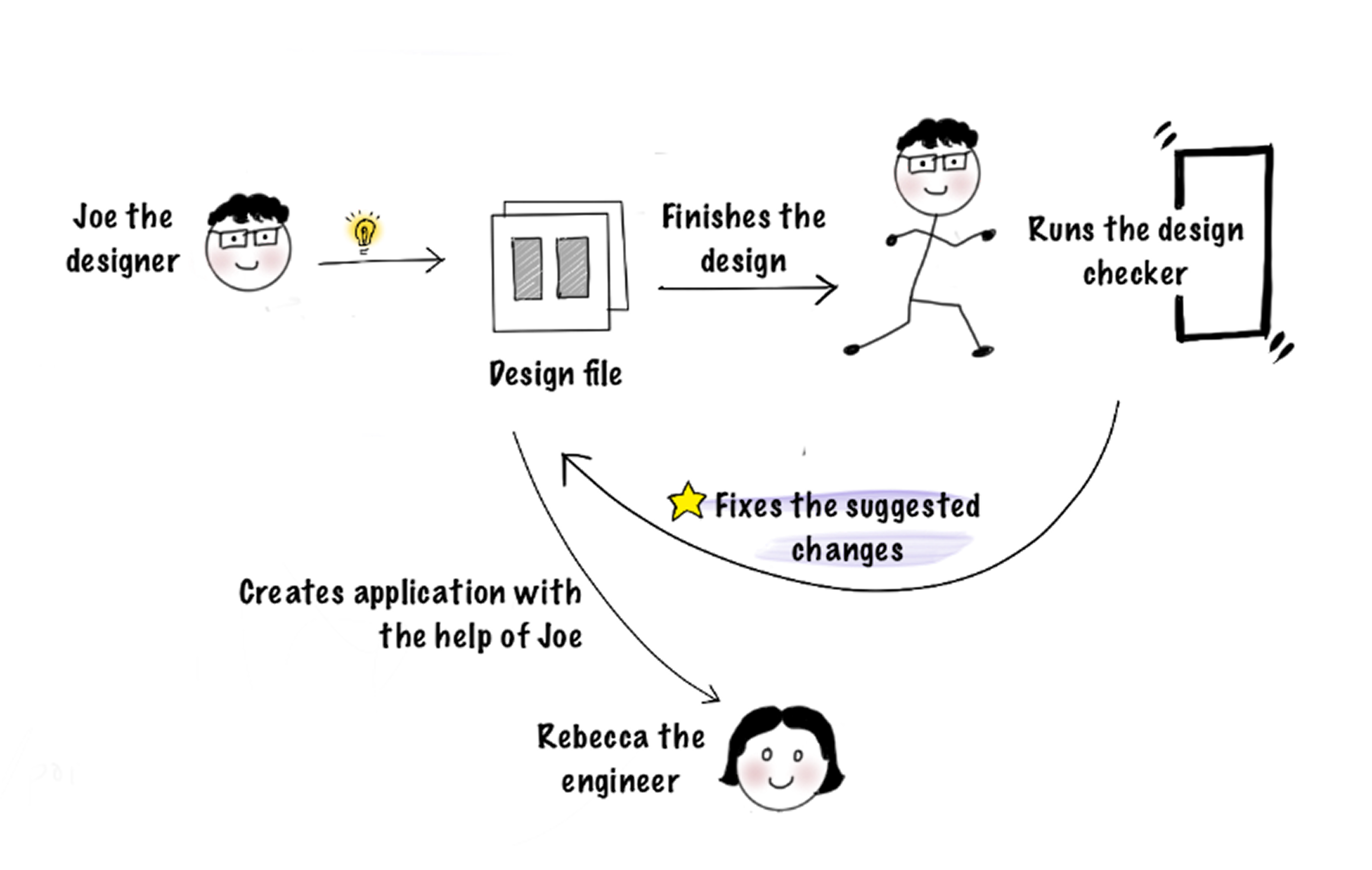
My goal: make the design system loveable. The path: stop telling designers to come to the system. Bring the system to them — inside Sketch and Figma, automatically.

THE ORG I WORKED ACROSS
5+
BRANDS
20+
PRODUCT GROUPS
200+
DESIGNERS
500+
ENGINEERS
MY ROLE
UX Design LeadVP of Design Systems
SCOPE
MDS + Design Assistantorg-wide adoption
TIMELINE
May 2018 — Oct 2021~ 3 years 5 months
OUTCOMES
Pre-installed at JPMC5,400+ defects eliminated
5,400+
Defects eliminated
In the first 6 months of Design Assistant rollout.
Designer productivity
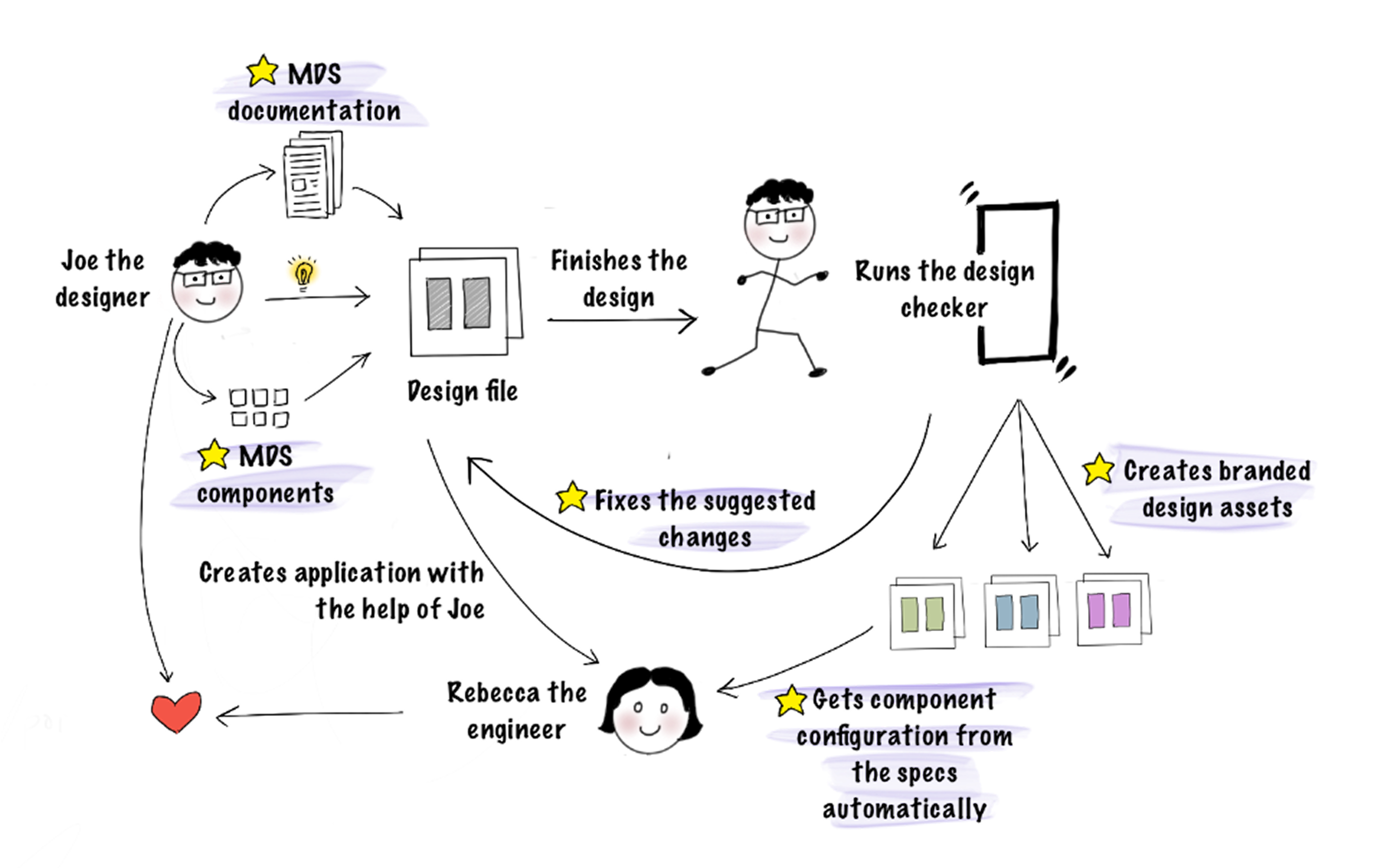
MDS designers no longer manually building branding assets.
100+
Components shipped
25+ patterns. Pre-installed on every designer's machine.
THE OPPORTUNITY

Each team built its own fork. Production drifted.

Before MDS could be loveable, it had to be adopted.

And adoption was failing — not for lack of a system, but because the system fought the designers' workflow.

THE INITIAL SCENARIO

Every team forked their own system.

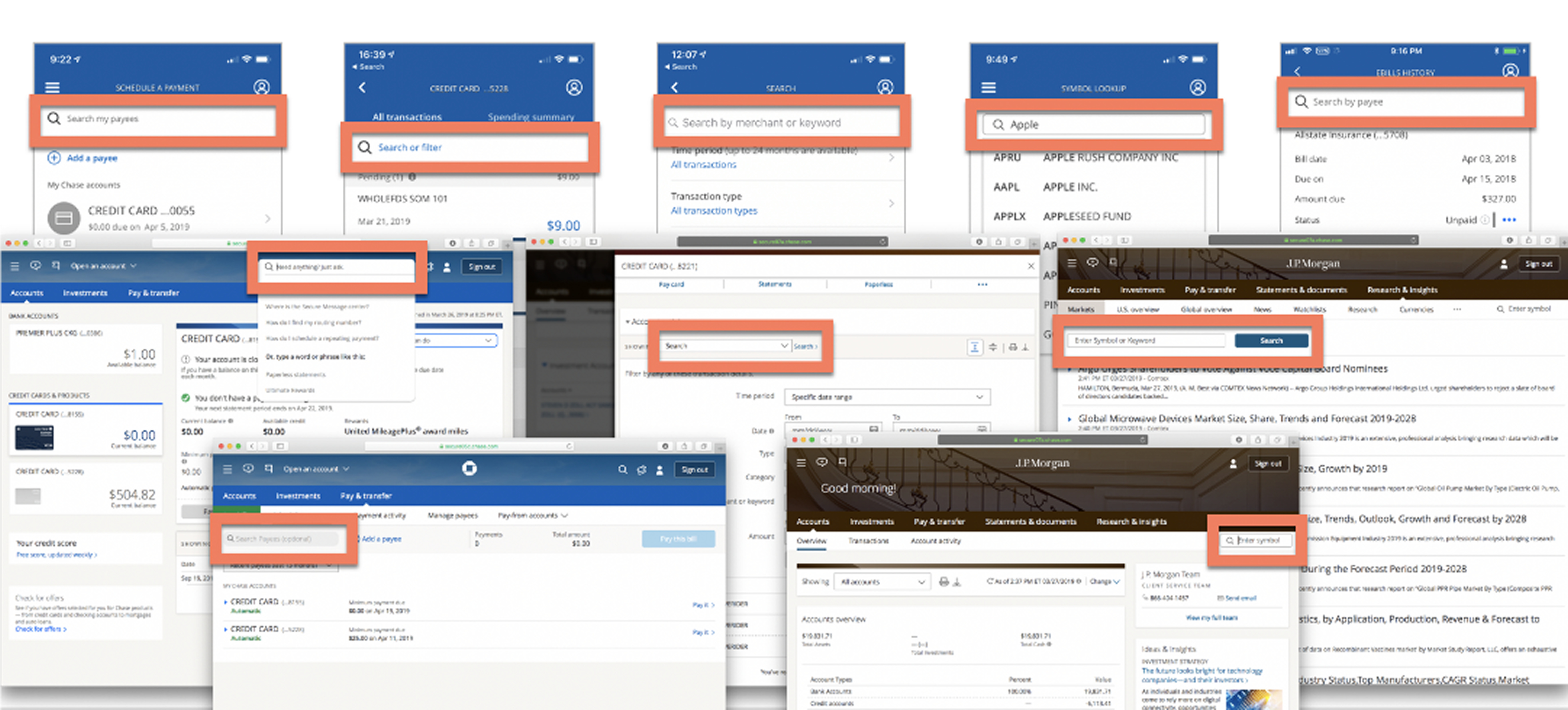
Each design team created or forked their own design system. Patterns drifted. Components went stale. The same Chase button appeared in five different shades across production.

THE BEHAVIOR

Designers worked around MDS, not with it.

Switching to MDS was tedious. The system disrupted designers' normal workflow. The design org had no shared measure of quality — so drift was invisible until it shipped.

Drift in production
Same features appearing differently across the application in production.
RESEARCH

One question, three painful findings.

RESEARCH QUESTION

"What are the pain points to adopt a single design system in a large design organization?"

I conducted an internal audit across product squads to understand the complexity, scale, and bottlenecks of design at JPMC. Three findings showed up repeatedly.

THE VISION

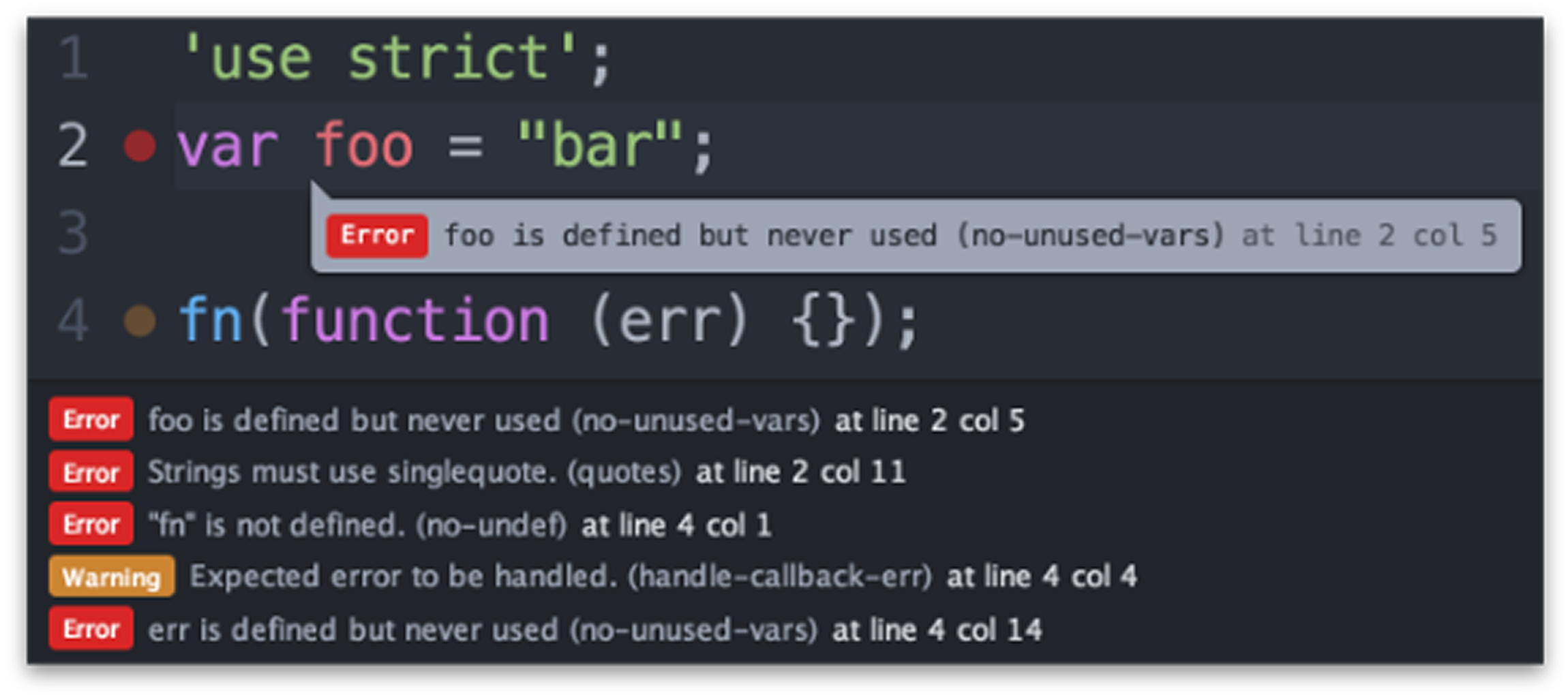
A linter for designers. Like ESLint for code.

If designers wouldn't come to the design system, the design system would come to them.

Inside Sketch and Figma, right inside the workflow they already used. Drawing parallels from coding: developers had ESLint. Designers had nothing.

THE BIG IDEA

"What if MDS shipped as a linter inside Sketch and Figma — a companion tool that brought the design system to the designer, not the other way around?"

Coding Linter
Coding Linter
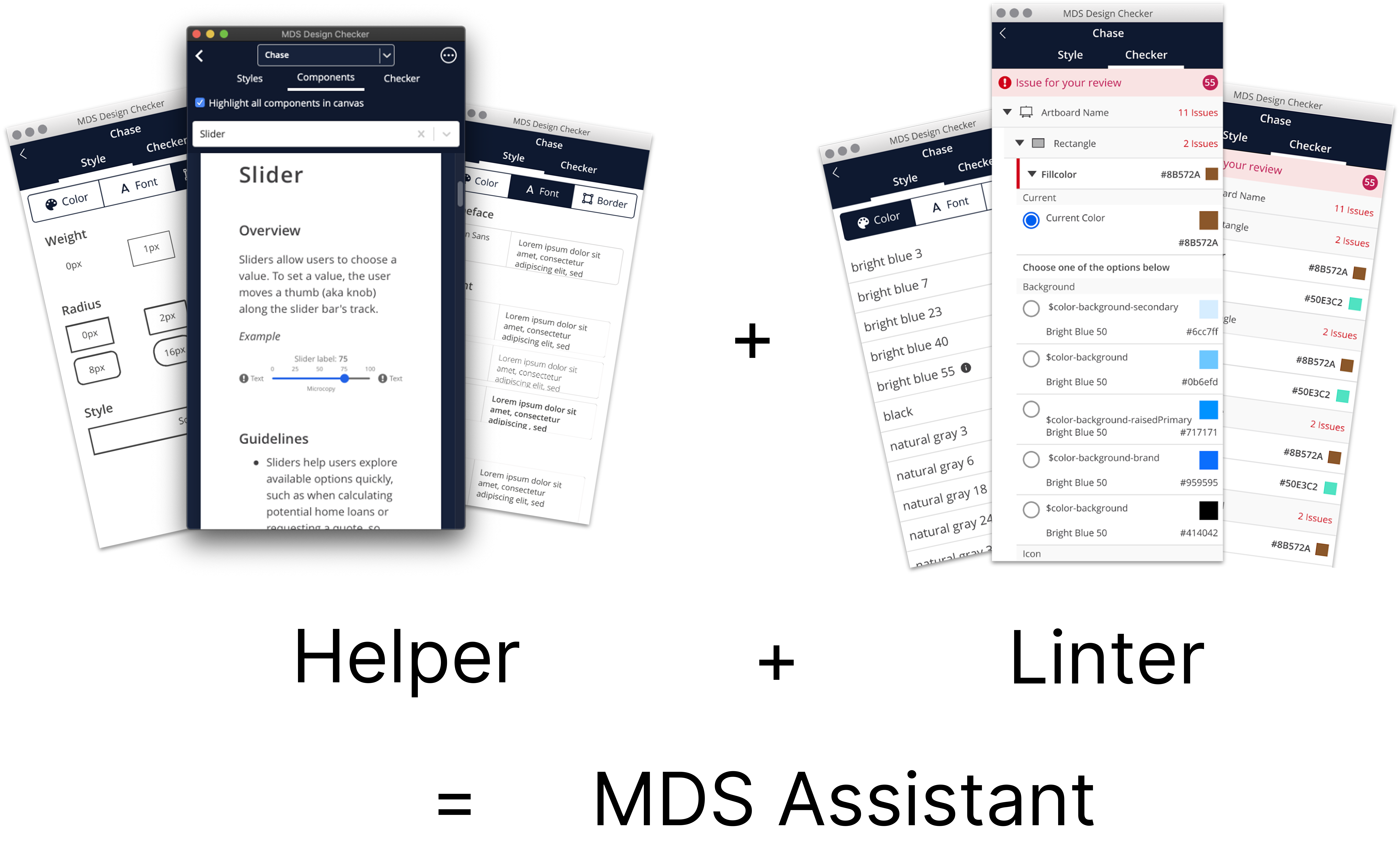
The MDS Assistant Storyboard
The Launch

MDS LINTER V1

The split video streams
The MDS Assistant V1
EVOLUTION

V1 → V2. One pivotal lesson.

Design Assistant didn't ship loveable. V1 shipped as an "annoying quibbler."

V2 was the version designers fell in love with. The difference between them is the entire lesson of this case study.

VERSION 1 — The linter

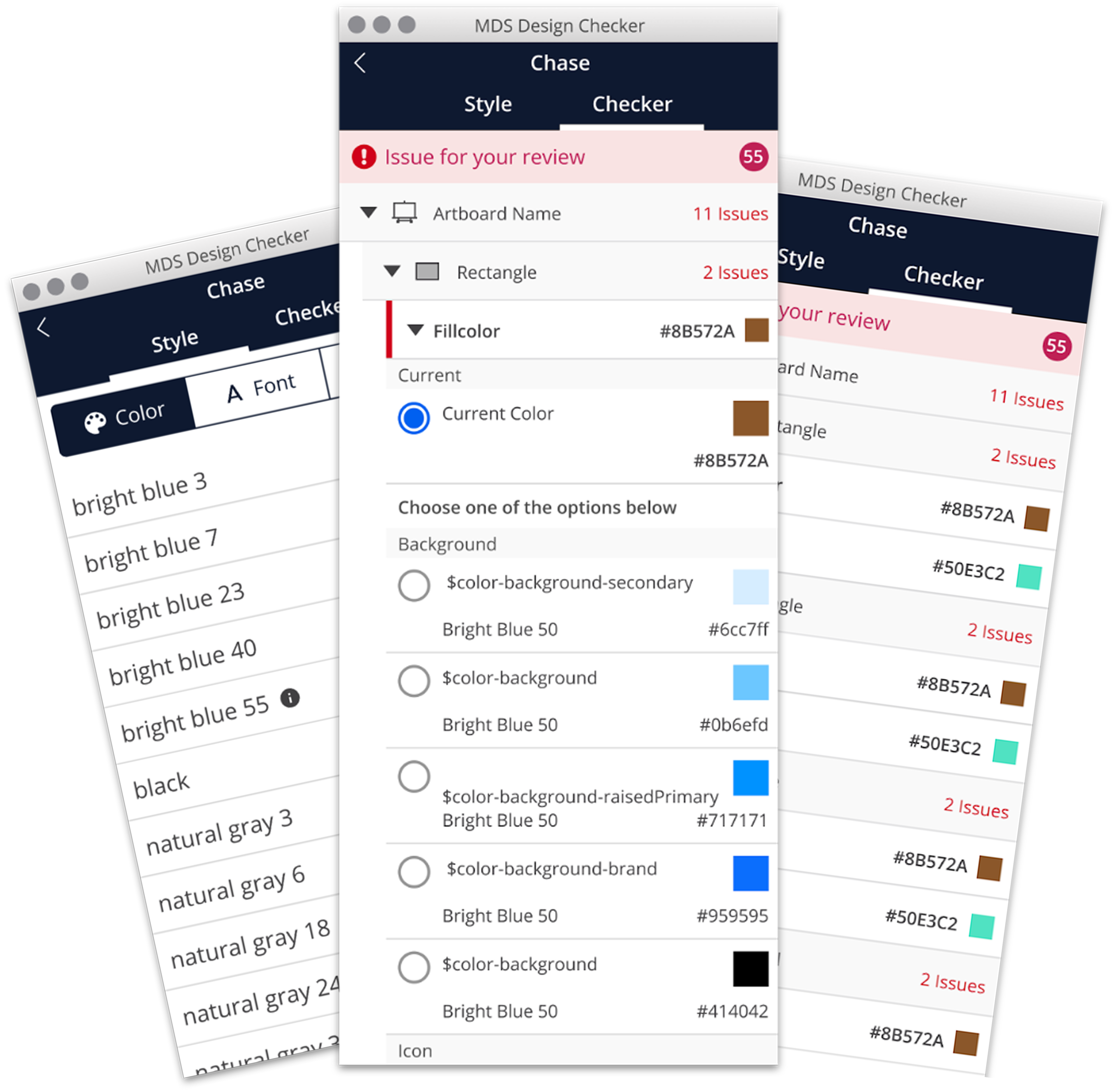
Brought MDS fundamental styles into the designer's workflow. Checked ADA contrast, colors, text, borders. Grouped defects by type for batch fixing.

The split video streams
MDS Assistant V1 annoyed designers with mandatory fixes ranging in 1000's sometimes.

The surprising discovery from alpha research.

Designers were uncomfortable with my grouping structure. They wanted to see defects the way they saw their work — as a layer tree, just like Sketch and Figma.

THE INSIGHT

"Automation should partner with the person, not overtake it."

I changed course. Redesigned Design Assistant's information architecture to mirror the designers' mental model — the same layer tree they already knew. The pivot saved the product.

The split video streams
The MDS Assistant V2

VERSION 2 — The friendly companion

From "annoying quibbler" to friendly companion. V2 stopped policing and started helping.

The split video streams
Design Assistant v2 : The friendly companion UI with branding tools, library management, and the layer-tree defect view.
OUTCOMES

From tolerated to pre-installed.

Design Assistant is now pre-installed on every JPMorgan Chase designer's machine. MDS engages directly with 5+ brands, 20+ product groups, 200+ designers, and 500+ engineers daily — and the system has grown beyond my team.

What changed in the org.

REFLECTIONS

What I carry forward.

NEXT CASE STUDY →

Vidyo — A flexible video platform for surgery, defense, and everything in between.

VIEW CASE STUDY →